
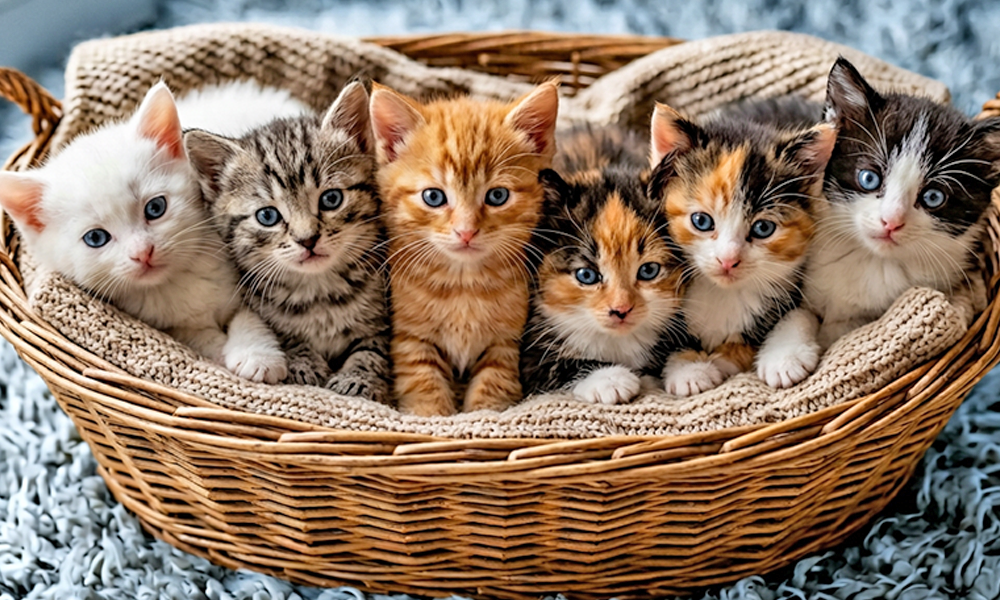
Every July 10, National Kitten Day celebrates the playful energy, curiosity, and affection kittens bring into our lives. Created by animal advocate Colleen Paige, the observance also calls attention to kittens in shelters and rescue organizations waiting for their forever homes.
KITTEN FACTS
A kitten's early development happens quickly. Newborn kittens are completely dependent on their mother. Their eyes are closed, their ears are folded, and they cannot regulate their body temperature. When a kitten first opens their eyes, they are blue, regardless of breed. Their permanent eye color will emerge later - usually at about two months old. During their early weeks, kittens may spend up to up to 20 hours a day sleeping, conserving energy for rapid growth.
Meowing begins as a way kittens communicate with their mother - letting her know if they are hungry, cold, or distressed. As cats grow older, they rarely meow to other cats, but many continue this vocalization to communicate with people.
At about four weeks, many kittens begin the weaning process, gradually moving from their mother’s milk or kitten formula to nutritionally complete kitten food. Weaning is generally completed between eight and ten weeks.
Play is another important part of kitten development. Chasing, pouncing, climbing, and wrestling help kittens build coordination while learning appropriate social behavior.
KITTEN CARE
Proper kitten care begins with a veterinary visit to check for parasites, discuss nutrition, and create an individualized schedule for vaccinations and preventive care. Owners should also discuss spaying or neutering, microchipping, and flea prevention with their veterinarian.
It's important to know that a female kitten can become pregnant as early as 4 months, when she enters adolescence. Therefore, it's important to work with your veterinarian to schedule spaying as early as possible. Spaying and neutering also minimize destructive behaviors in the home.
At home, kittens need specialized kitten food, access to fresh water, a clean litter box, scratching surfaces, a secure place to sleep, and lots of interactive play. Since kittens investigate everything, homes should be kitten-proofed. Secure electrical cords, window screens, medicines, cleaning supplies, thread, ribbon, and small objects that could be swallowed. Interactive toys and daily play sessions provide exercise and mental stimulation. Hands should not be used as toys, as this can encourage biting and scratching. Shelters often suggest adopting two bonded kittens at the same time, so they always have a playmate.
Amazingly, kittens do not really have to be potty trained. They are born with the instinct to cover their waste, so all you have to do is show them their clean, easy-to-access litter box and they wlll do the rest.
READY TO ADOPT?
National Kitten Day and the kitten season is the perfect time to consider adoption. Before bringing home a kitten, make your household is ready for a long-term commitment. Ask shelter staff about each kitten’s health, personality, energy level, and comfort with children or other animals. Get started now to find the purr-fect addition to your home.
National Kitten Day reminds us that celebrating kittens means more than watching cute kitten videos. It means helping kittens grow into healthy, confident, well-loved cats. Even if you are not in a position to adopt a kitten, you can still help by fostering, volunteering, donating supplies, or sharing adoption profiles.
If you are considering adopting a kitten and have any questions, feel free to contact our office.
336-644-1522